Picking out the best Sheet Metal Polishing Machine isn’t just about glancing at motor specs or comparing prices in a catalog. Honestly, it all starts with really understanding what your actual production needs are. Think about the thickness of the sheets, the material you're working with, how the edges look before polishing, the surface finish you want, and how busy your daily workload is. For example, stainless steel usually needs different abrasives than aluminum or carbon steel. So, it’s a good idea to gather all these details before reaching out to any suppliers.
A good machine should give you a consistent finish without getting too hot, vibrating too much, or wasting material. Make sure to check out things like the working width, belt speed, how the polishing head is designed, then dust collection systems, and emergency stop features. And hey, don’t be shy—ask for a demo where they process your own sheets. Take a close look at tricky spots like corners, weld areas, and narrow edges. Sometimes, those little tests reveal issues that big flashy demonstrations hide. Also, see how easy it is to set up, swap belts, clean, and how loud it gets. Well-thought-out maintenance features can save you hours of headaches down the line.
Terms can get pretty confusing here. Some suppliers might call similar equipment a "sheet metal sanding chamfering machine" or a "sheet metal polishing chamfering machine,” but those might actually do different things. It’s important to clarify exactly what process and tooling you’re getting. If you’re experienced, don’t hesitate to ask for detailed specs, test reports, warranty info, training options, and support for spare parts. A trustworthy manufacturer will be upfront about what their machine can or can’t do—that’s really important.
Lastly, this guide for 2026 aims to help you compare different machine types, finishing techniques, how automated they are, and what they’ll cost you to own. It also considers your operator’s experience, because even the coolest-looking machine can be tricky if it’s not easy to control. No machine’s perfect, so your goal should be finding a good balance between the quality of the finish, safety, productivity, and reliability in the long run. Take a moment to double-check your assumptions before making a purchase—sometimes, that last pause can save you from making an expensive mistake.
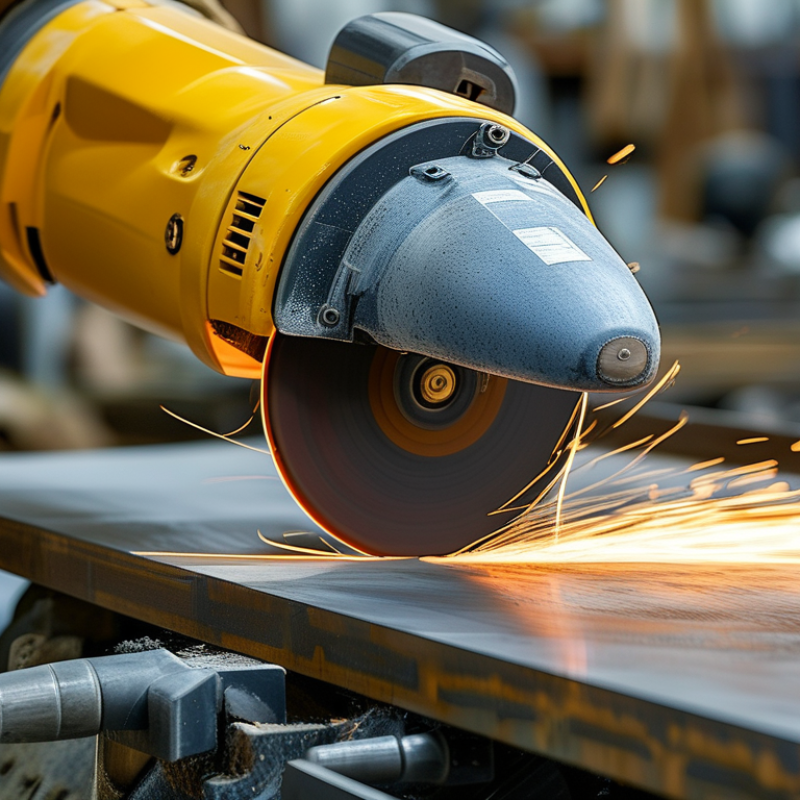
Choosing a Sheet Metal Polishing Machine begins with thickness, not advertised speed. For sheets from 0.3–6 mm, verify the machine’s rated working range, not its maximum claim. A 0.3 mm sheet can flutter, buckle, or lose its edge under excessive pressure. A 6 mm plate demands stronger drive power, stable abrasive contact, and a rigid conveyor system.
The 2024 World Steel Association data reported approximately 1.88 billion tonnes of crude steel production worldwide. That scale reflects continuing demand for efficient sheet processing. However, production volume does not guarantee suitable polishing performance. ISO 9445 and EN 10051 also show why thickness tolerance matters. A nominal 1 mm sheet may arrive with measurable variation across its width. Ask for pressure-control accuracy and test results using your actual material.
In practical trials, place a thin sample beside a 6 mm sample. Watch the contact marks. Thin sheets need gentle, consistent pressure and reliable hold-down support. Thick sheets need slower feed control and enough motor reserve. Leave capacity margin. A machine rated exactly for 6 mm may struggle during continuous operation. I would not trust a perfect showroom pass alone. Real batches contain scratches, waviness, and inconsistent hardness. That detail is easy to underestimate. Test stainless steel, carbon steel, and coated surfaces separately, because abrasive loading and heat can change quickly.
Choosing a sheet metal polishing machine starts with matching its abrasive range to the required finish. FEPA P-grit tables and ISO 6344 classify coated abrasives by grain size, giving buyers a reliable reference for grit selection. P80 removes laser scale, weld discoloration, and deeper scratches. P120 to P240 refines visible grinding marks on stainless steel and aluminum. P320 to P600 creates a smoother satin surface with controlled reflectivity. P800 to P1200 supports near-mirror preparation, but it does not guarantee a perfect mirror finish alone.
Machine pressure matters as much as grit. Excessive pressure can create heat tint, rounded edges, and uneven brush lines. A practical sequence is P80, P120, P240, P400, P600, and then P800 or P1200. Do not skip too many stages. Deep P80 scratches often remain visible under bright inspection lights. Surface-finish studies commonly measure roughness in Ra, while ISO 21920 provides the current profile-roughness framework. Buyers should confirm whether their machine can maintain stable pressure and consistent belt speed across the sheet.
Tips: Test a 300 × 300 mm sample first. Wipe the panel between grits. Use fresh abrasive on critical edges. Check Ra when specifications demand it. I sometimes choose P600 too early, thinking the surface looks ready. It usually is not. A slower progression can reduce rework, even when it consumes more abrasive. FEPA and ISO references should guide the purchase, but real production trials remain essential.
Select abrasives by comparing FEPA P-grit sizes from coarse stock removal to fine finishing.
Lower grits use larger abrasive particles for faster material removal and scratch leveling. Higher grits create finer, more uniform finishes and are commonly selected before satin, brushed, or polishing operations. The particle sizes shown are nominal FEPA P-grit values; actual surface roughness depends on metal type, machine pressure, speed, lubrication, abrasive condition, and finishing technique.
Nominal abrasive particle sizes: FEPA P-grit designation, expressed in micrometres (µm).
A sheet metal polishing machine should offer a practical belt-speed range between 15 and 35 m/s. Lower speeds provide more control during finishing and reduce heat on thin sheets. Higher speeds remove marks faster, but they can quickly discolor stainless steel or soften aluminum edges. Speed alone does not determine performance. Abrasive type, contact-wheel hardness, belt tension, and operator pressure also matter.
I once increased speed to shorten a polishing cycle. The surface looked brighter, but faint heat marks appeared near the corners. That result changed my testing method. I now compare identical panels at 15, 20, 25, and 35 m/s. I record cycle time, surface temperature, scratch direction, and belt wear. A simple test can reveal more than a sales specification. The fastest setting is not always the best setting.
Tips: Choose adjustable speed control, not a fixed-speed design. Start near 15 m/s for delicate sheets and detailed edges. Increase speed gradually when working with thicker material. Keep pressure consistent during comparisons. Check the finished surface under angled light. Small defects become obvious there. Also, confirm that the machine includes stable belt tracking, effective guarding, and a clearly reachable emergency stop. I would not ignore these details, even when the advertised polishing rate looks impressive.
Feed accuracy changes the real value of a Metal Sheet Polishing Machine. Manual feeding remains affordable and flexible. An operator can adjust each sheet by sight and touch. This helps with unusual shapes, mixed thicknesses, and small production runs. However, fatigue creates uneven spacing. A sheet may enter two millimeters off-center by the afternoon.
CNC feeding offers steadier movement through programmed rollers and controlled positioning. In practical testing, repeatability depends on calibration, sheet flatness, and roller condition. A clean sensor and firm guide rail matter more than impressive software claims. CNC systems suit repeated parts with consistent dimensions. They still need skilled setup. Small errors can return when material bends or surface dust builds up.
Robotic feeding provides the highest automation level. Vision sensors can locate holes, edges, and changing orientations before polishing begins. A robot also reduces direct handling marks on finished sheets. Yet accuracy depends on gripper pressure, programming, and communication between the robot and polishing unit. Thin sheets may flex during pickup. That problem is easy to underestimate.
Manual systems reward careful operators. CNC systems reward disciplined maintenance. Robots reward strong integration work. My imperfect conclusion is simple: maximum automation does not always mean maximum accuracy. Compare actual feed repeatability, changeover time, and error records from materials like aluminum, stainless steel, and coated sheet. Ask for production samples, not only specifications.
When buying a Metal Flat Sheet Polishing Machine, safety documents deserve the same attention as polishing speed. Request the current Declaration of Conformity, technical file summary, and risk assessment. CE marking can support compliance, but it does not replace an independent inspection. Check whether the machine matches applicable local rules and OSHA requirements for your workplace.
Open the guarding panels during evaluation. Fixed guards should resist easy removal, while access doors need reliable interlocks. Test the emergency stop, restart prevention, and isolation points. A machine should not resume unexpectedly after power returns. Guards matter. Also inspect abrasive belts, rotating shafts, and sheet entry points. Small gaps can catch gloves, sleeves, or loose material.
Dust control is equally important. Connect the supplied extraction system and observe airflow near the polishing zone. Dust should not settle on the motor housing, floor, or operator’s face shield. Ask for airflow data, filter specifications, cleaning instructions, and combustible-dust guidance where relevant. Keep extraction ducts short, sealed, and properly grounded when required. PPE helps, but it is not the main control. Training records, maintenance logs, and clear lockout procedures reveal operational reliability. In practice, buyers sometimes trust a certificate too quickly. That is a mistake worth admitting. A final site-based risk review can expose hazards missed in a showroom.
| Evaluation Dimension | What to Verify Before Purchase | Relevant Requirement or Reference | Acceptable Evidence | Common Red Flag | Buying Recommendation |
|---|---|---|---|---|---|
| Machine Identification | Confirm the exact model, serial number, rated voltage, phase, frequency, motor power, maximum workpiece size, and intended polishing process. | Equipment identification and technical documentation practices. | Permanent nameplate, technical data sheet, wiring diagram, operating manual, and declaration documents. | The quotation describes only a general machine family and does not identify the supplied configuration. | Require the purchase order to reference the exact configuration and electrical specification. |
| CE Marking for EU/EEA Use | Check whether the machine is supplied with a valid CE marking, an EU Declaration of Conformity, risk assessment information, and instructions in the required language. | Machinery Directive 2006/42/EC remains the principal machinery framework during 2026; Regulation (EU) 2023/1230 applies from 20 January 2027. | Signed EU Declaration of Conformity identifying the machine, applicable legislation, and harmonized standards used. | A CE logo is shown without a declaration, technical file reference, or responsible manufacturer information. | Do not treat the CE symbol alone as proof of conformity; request the complete documentation package. |
| Electrical Safety | Verify protective bonding, overcurrent protection, emergency-stop circuits, enclosure ratings, cable routing, and compatibility with the facility supply. | IEC 60204-1 is a widely used reference for the electrical equipment of machinery. | Electrical schematic, insulation or continuity test records, component ratings, and documented commissioning procedure. | Unprotected terminals, missing earth connection, unclear voltage requirements, or an emergency stop that only stops the polishing wheel. | Include a site electrical inspection and functional test before production use. |
| Machine Guarding | Inspect guards around rotating wheels, belts, pulleys, shafts, abrasive media, pinch points, and workholding areas. | OSHA 29 CFR 1910.212 requires machine guarding against hazards such as point-of-operation exposure, rotating parts, and flying chips or sparks. | Fixed or interlocked guards, documented risk assessment, guard inspection checklist, and clear access limitations. | Operators can reach the rotating tool, belt, spindle, or pinch point during normal operation. | Reject machines that depend only on operator attention or warning labels where a physical guard is practicable. |
| Interlocks and Safety Devices | Test guard switches, access-door interlocks, emergency stops, restart prevention, and safety relay behavior. | ISO 13849-1 may be used to design and validate safety-related control systems; the required performance level depends on the risk assessment. | Safety circuit diagram, validation report, reset-function test, and documented fault-response test. | The machine restarts automatically after power recovery or after a guard is closed. | Specify manual reset and controlled restart requirements in the purchase specification. |
| Emergency Stop Function | Confirm accessible emergency-stop locations, stop-time performance, reset behavior, and whether hazardous energy remains after stopping. | Emergency-stop design is commonly addressed through ISO 13850 and applicable machinery safety requirements. | Functional test record, stop-time measurement where relevant, and clearly labeled controls. | The emergency stop is difficult to reach, unlabeled, or used as a substitute for isolation during maintenance. | Use emergency stop for immediate hazard control, but require lockout for servicing and cleaning. |
| OSHA Workplace Compliance | Determine how the machine will satisfy the employer’s workplace safety duties, including guarding, training, inspection, PPE, and safe operating procedures. | OSHA generally regulates employers and workplaces; OSHA does not provide a universal approval label for every machine. | Site risk assessment, written procedures, training records, inspection forms, and machine-specific hazard controls. | A seller claims that an “OSHA-certified machine” automatically makes the buyer’s workplace compliant. | Have the employer’s competent safety professional verify the complete installation and work process. |
| Lockout/Tagout Capability | Check whether electrical, pneumatic, hydraulic, mechanical, and stored rotational energy can be isolated and locked. | OSHA 29 CFR 1910.147 covers control of hazardous energy during servicing and maintenance. | Lockable disconnect, isolation points, zero-energy verification procedure, and machine-specific lockout instructions. | A stop button is the only method provided for cleaning, wheel replacement, or maintenance. | Require clearly labeled isolation points and documented lockout steps before acceptance. |
| Metal Dust Capture | Verify source capture at the polishing point, hood enclosure, duct connection, airflow capacity, filter type, and pressure-drop monitoring. | OSHA 29 CFR 1910.94 addresses ventilation requirements for certain operations; local exhaust ventilation is generally preferred for contaminant capture at the source. | Airflow design data, capture-velocity measurements, commissioning report, filter specification, and maintenance schedule. | A general room fan is presented as an adequate substitute for source capture. | Purchase the machine together with a properly engineered dust-collection system where dust is generated. |
| Combustible Metal Dust Risk | Identify the processed metal, dust particle characteristics, ignition sources, collection method, spark potential, and housekeeping requirements. | Combustible metal dust can create fire or explosion hazards; applicable combustible-dust and fire-code requirements must be evaluated for the specific material and system. | Dust hazard analysis, material safety information, classified-equipment assessment where applicable, and documented collector design review. | Dust is discharged into an ordinary indoor vacuum or collector without confirming material compatibility. | Obtain a site-specific combustible-dust assessment before selecting the collector or duct layout. |
| Spark and Fire Control | Assess spark generation, hot-work interaction, abrasive-wheel condition, collector placement, fire detection, and extinguishing provisions. | Controls should be selected from the hazard assessment and applicable fire, electrical, and combustible-dust codes. | Fire-risk assessment, spark-control design, temperature monitoring where needed, and documented preventive-maintenance instructions. | No separation between spark-producing equipment and dust accumulation areas. | Ask for a written explanation of how sparks and hot particles are prevented from reaching accumulated dust. |
| Abrasive Wheel Safety | Check wheel speed rating, wheel guard coverage, spindle condition, mounting method, work-rest adjustment, and inspection procedure. | OSHA 29 CFR 1910.215 contains requirements for abrasive wheel machinery; the applicable provisions depend on the equipment configuration. | Wheel manufacturer data, maximum peripheral-speed marking, guard dimensions, ring-test or inspection procedure where applicable. | The wheel’s rated speed is lower than the machine’s maximum spindle speed. | Confirm compatibility of every wheel, pad, belt, and polishing accessory before operation. |
| Noise and Vibration | Request measured sound levels and evaluate vibration from the motor, spindle, workholding system, and abrasive media. | OSHA hearing-conservation requirements may apply when employee noise exposure reaches the applicable action level; exposure must be assessed at the workplace. | A-weighted sound-pressure data, vibration measurements, balancing procedure, and preventive-maintenance requirements. | Only a “low-noise” statement is provided without a test method or operating conditions. | Conduct an onsite noise survey after installation and provide hearing protection when required by the assessment. |
| Ergonomics and Workholding | Review loading height, reach distance, part weight, fixture stability, repetitive motion, access for adjustment, and risk of hand contact with the tool. | Ergonomic controls should be based on the actual task, workpiece, production rate, and operator population. | Trial demonstration using representative parts, fixture drawings, lifting limits, and operator feedback. | Operators must manually hold unstable parts close to the rotating polishing media. | Select adjustable fixtures or powered handling aids when part size, weight, or repetition creates risk. |
| Control of Chemical Exposure | Identify polishing compounds, buffing pastes, solvents, cleaners, and any mist or vapor generated during use. | OSHA 29 CFR 1910.1200 addresses hazard communication for hazardous chemicals in the workplace. | Safety data sheets, container labels, exposure-control procedures, PPE requirements, and ventilation assessment. | The supplier cannot identify the required compound or provide current safety data. | Approve consumables separately and verify compatibility with the machine, ventilation, and waste-handling system. |
| Documentation and Training | Confirm that operating, setup, cleaning, maintenance, troubleshooting, emergency, and inspection instructions are supplied. | Safety instructions should reflect the actual machine configuration and workplace hazards. | Machine manual, preventive-maintenance schedule, training materials, inspection forms, spare-parts list, and language-specific instructions. | Generic instructions omit the installed guard, dust collector, control panel, or emergency procedure. | Make documentation, operator training, and maintenance training acceptance criteria in the contract. |
| Commissioning and Acceptance Testing | Test the machine with representative sheet metal, polishing media, production speed, guarding, dust extraction, and emergency procedures. | Acceptance should be based on documented safety, performance, quality, and environmental criteria. | Signed commissioning checklist, guard and interlock tests, airflow readings, sample finish results, and operator sign-off. | The machine is accepted solely from photographs or a brief unloaded demonstration. | Use a written factory and site acceptance test with measurable pass/fail criteria. |
| Maintenance and Spare Parts | Evaluate access for inspection, filter replacement, wheel changes, lubrication, belt tensioning, guard removal, and replacement-part availability. | Maintenance must be performed under appropriate hazardous-energy control and according to the equipment instructions. | Parts list, service intervals, lockout instructions, recommended inventory, and response-time commitment. | Routine maintenance requires bypassing a guard or accessing an unisolated rotating assembly. | Prioritize designs that allow safe maintenance without defeating protective devices. |
| Final Compliance Decision | Confirm that legal requirements, machine safeguards, dust controls, workplace procedures, training, and commissioning records are complete. | Compliance depends on the machine, installation, material, process, jurisdiction, and employer controls—not on one marking or certificate. | Completed compliance checklist, risk assessment, technical file or declaration documents, test records, and approval by the responsible safety professional. | Important safety questions are deferred until after payment or installation. | Do not release final payment or place the machine into production until all agreed safety and compliance items are closed. |
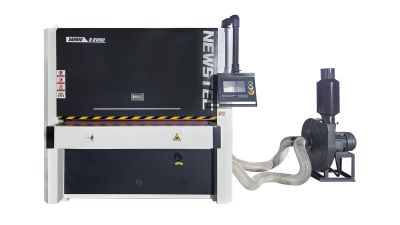
The 1600mm Automatic Metal Deburring Machine is designed to improve the quality, safety, and efficiency of modern metal fabrication. During sheet metal production, sharp burrs can form along cut edges, affecting appearance and creating risks for operators. This machine removes unwanted burrs from a wide range of metal sheets, helping produce smoother edges and more consistent surfaces for subsequent processing.
With its 1600mm working width and automatic operation, the equipment supports efficient handling of large-format sheets while reducing the need for labor-intensive manual finishing. Its stable deburring performance can help prepare materials for bending, welding, coating, assembly, and other production stages. By improving edge quality, it also helps minimize processing interruptions and maintain a more uniform final result.
As an experienced factory and supplier in China, we provide practical deburring solutions for manufacturers serving diverse industrial applications. Our equipment is developed to meet demanding production requirements while balancing reliable performance and competitive value. Choosing a suitable automatic metal deburring machine can enhance both the functional safety and visual quality of finished metal products, making it a valuable addition to efficient sheet metal production lines.
: Define the target by Ra, usually between 0.2 and 1.6 μm. A 0.2 μm finish needs tighter control than 1.6 μm. Specify cutoff length, evaluation length, direction, and waviness limits. Brightness alone proves little.
Measure the sheet after deburring and polishing. Inspect the center, feed path, and edge transition. A portable profilometer can reveal scratches hidden by reflected light. Visual inspection helps, but it is not fully repeatable.
No single setting suits every alloy or thickness. Pressure, abrasive condition, and feed speed may need adjustment. Aluminum, stainless steel, and coated sheets can behave differently. This is easy to underestimate.
Manual feeding offers flexibility for unusual shapes and small batches. CNC feeding provides steadier movement for repeated parts. Robotic feeding can locate holes and edges automatically. Maximum automation does not always mean maximum accuracy.
Poor calibration, bent sheets, worn rollers, and dirty sensors can create errors. Dust may also affect guides and positioning components. Check repeatability during real production trials. Software claims are not enough.
Thin sheets may flex during pickup. Incorrect gripper pressure can shift the sheet. Programming and machine communication must work together. A sample test may expose problems early.
Check fixed guards, access-door interlocks, emergency stops, and restart prevention. Inspect belts, shafts, and sheet entry points for trapping gaps. The machine should not restart after power returns. Guards matter.
Connect the extraction system during evaluation. Observe whether dust reaches the motor housing, floor, or face shield. Request airflow data, filter details, cleaning instructions, and grounding guidance. PPE supports control, but it is not the main control.
Record line speed, abrasive condition, pressure, and measured Ra values. Keep maintenance logs, training records, and lockout procedures. Review error records across different materials. Certificates alone can be trusted too quickly.
Choosing the Best Sheet Metal Polishing Machine starts with clearly defining the required surface finish, such as a target roughness of Ra 0.2–1.6 μm in line with ISO 21920. Confirm that the machine can safely process your sheet thickness, typically from 0.3 to 6 mm, without distortion or uneven polishing. Abrasive selection is equally important: coarser P80 grits can support initial material removal, while finer grades up to P1200 are suitable for smoother, more refined finishes.
Before purchasing, compare belt-speed capabilities within the 15–35 m/s range and select a setting that matches the material, abrasive, and finish goal. Evaluate whether manual, CNC, or robotic feeding provides the accuracy and productivity your operation requires. Finally, verify essential safety features, including CE and OSHA-related requirements where applicable, effective guarding, emergency controls, and reliable dust collection. A balanced assessment of finish quality, capacity, speed, automation, and workplace protection will support a practical, long-term investment.